 Skip to main content

Are you confused about whether to choose toner or ink for your printer? You’re not alone.
Understanding the key differences between toner and ink can save you time, money, and frustration. Whether you print occasionally or handle large volumes, knowing how each works and their pros and cons will help you make the best decision for your needs.
This complete breakdown will clear up the mystery and guide you to the right choice, so you get sharp, reliable prints every time. Keep reading to discover what really sets toner and ink apart!
Toner Basics
Toner is a key component in laser printing technology. It differs greatly from traditional ink used in inkjet printers. Understanding toner helps you choose the right printer and supplies for your needs. This section breaks down what toner is made of and which printers use it.
Composition And Form
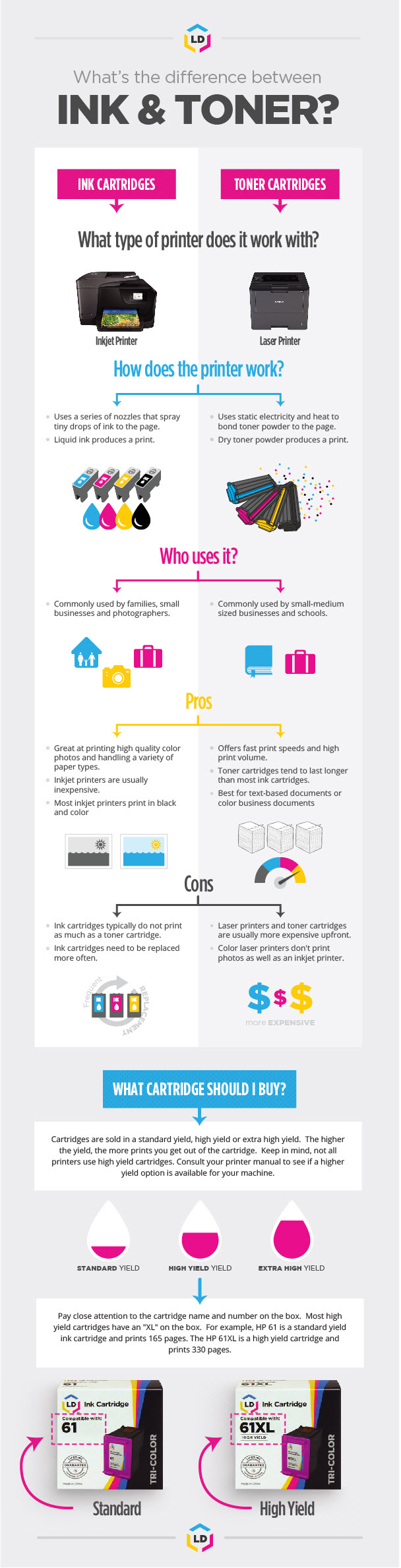
Toner is a fine powder. It contains plastic particles, carbon, and coloring agents. The plastic melts when heated during printing. This process fuses the toner to the paper. Toner powder is dry, unlike liquid ink. It does not dry out or clog printer parts.
Printers That Use Toner
Laser printers use toner cartridges. These printers use a laser beam to draw the image on a drum. The toner sticks to the charged areas on the drum. Then, heat and pressure transfer the toner to the paper. Toner is common in office and high-volume printers. It suits users who print many pages regularly.
Ink Basics
Understanding the basics of ink helps to see how it works in printers. Ink is a liquid used to create text and images on paper. It flows smoothly from the printer onto the page. The way ink is made and used affects print quality and printer type.
Ink is designed to dry quickly and stick to paper. It comes in different colors, mainly cyan, magenta, yellow, and black. These colors mix to produce a wide range of shades. Knowing how ink works makes it easier to choose the right printer and supplies.
Liquid Composition
Ink is mainly water or oil-based liquid. It contains pigments or dyes to add color. Pigments are tiny solid particles that sit on paper’s surface. Dyes dissolve in the liquid and soak into paper fibers. Other ingredients help control drying time and prevent clogs.
The liquid base evaporates as the ink dries, leaving the color behind. This process ensures sharp, bright prints. Different inks have formulas to suit various papers and printers. Some inks resist fading and water damage better than others.
Inkjet Printer Usage
Inkjet printers spray tiny droplets of ink onto paper. This method creates detailed and colorful prints. Inkjet printers are popular for photos and documents. They work well with various paper types, including glossy photo paper.
Ink cartridges need regular replacement because the liquid can run out fast. Using the right ink is important to avoid print head clogs. Inkjet printers require careful handling to keep prints clear and smudge-free. They are common in homes and small offices due to their affordability and quality.
Durability And Shelf Life
Durability and shelf life are key factors in choosing between toner and ink. Both affect how long your printer supplies last and the quality of your prints over time. Understanding these differences helps you pick the right option for your printing needs.
Toner Longevity
Toner is a dry powder that lasts much longer than ink. It does not dry out or clog printer parts. This makes toner ideal for printers used less often. Toner cartridges can print thousands of pages before needing replacement. Their long shelf life means they stay usable for months or even years. This durability reduces waste and saves money over time.
Ink Shelf Life Challenges
Ink is a liquid that faces several shelf life issues. It can dry up quickly, especially in warm or dry environments. Dried ink clogs printer nozzles and stops printing. Ink cartridges often expire faster than toner cartridges. Printers not used regularly cause ink to dry inside the machine. This leads to poor print quality and frequent cartridge replacements.
Print Quality And Consistency
Print quality and consistency are key factors in choosing between toner and ink. These elements affect how clear, sharp, and vibrant your printed documents or photos appear. Consistent print results matter for both personal and professional use. Understanding the differences helps in selecting the right printing method for your needs.
Sharpness And Detail With Toner
Toner uses fine powder fused to paper with heat. This process creates sharp edges and clear text. Laser printers with toner excel in printing detailed graphics and small fonts. The powder does not spread or bleed like liquid ink. This results in crisp, consistent prints over many pages. Toner prints stay sharp even after long storage.
Color Vibrancy And Ink
Ink is liquid and soaks into paper fibers. This allows for rich, vibrant colors, especially in photos. Inkjet printers with ink handle gradients and color blending better. Colors appear more natural and smooth with ink. However, ink can sometimes smudge or fade if not dried properly. For bright, colorful images, ink often delivers superior results.
Cost And Efficiency
Cost and efficiency are key factors when choosing between toner and ink for your printer. Understanding these aspects helps save money and ensures smooth printing. Both toner and ink vary in their initial price and how long they last. This affects your overall printing expenses and workflow.
Initial And Long-term Costs Of Toner
Toner cartridges usually cost more upfront than ink cartridges. This higher price reflects the advanced technology used in laser printers. Despite the initial cost, toner lasts much longer than ink. It can print thousands of pages before needing replacement. This reduces the frequency of buying new cartridges and lowers cost per page. Over time, toner proves to be more economical for heavy printing needs. Laser printers also require less maintenance, saving more money on repairs.
Ink Cartridge Replacement Frequency
Ink cartridges are cheaper to buy at first but run out faster. They often need replacement after printing a few hundred pages. Ink dries up inside the cartridge if the printer is unused for a while. This can cause clogs and wasted ink. Frequent replacements add up, making ink more expensive in the long run. Inkjet printers suit low-volume users who print occasionally. However, for regular or high-volume printing, ink cartridges can slow you down and increase costs.
Maintenance And Usability
Maintenance and usability differ greatly between toner and ink printers. Understanding these differences helps in choosing the right printer for your needs. Each type requires distinct care to keep it running smoothly and produce quality prints.
Toner Printer Maintenance Needs
Toner printers need less frequent maintenance. The toner powder does not dry out or clog the printer parts. This reduces the risk of print head damage. Cleaning the printer occasionally keeps dust and powder residues away. Toner cartridges last longer, so replacements happen less often. This saves time and effort for users. Regular use is not critical to prevent issues with toner printers. They handle long periods of inactivity better than ink printers.
Ink Printer Care And Issues
Ink printers require more attention to prevent clogs and drying. The liquid ink can dry inside the print heads if unused for days. This causes streaks or faded prints. Running cleaning cycles regularly helps keep the nozzles clear. Ink cartridges often need replacing more frequently than toner cartridges. Users must monitor ink levels closely. Some ink printers need to be used often to avoid clogging. Proper care ensures consistent print quality and avoids costly repairs.
Use Case Scenarios
Understanding the best use cases for toner and ink helps choose the right printer supplies. Each type suits different printing needs and environments. This section explains where toner or ink performs better.
High Volume And Office Printing
Toner works well for large printing jobs in offices. It prints fast and handles many pages without frequent cartridge changes. Laser printers with toner deliver sharp text and clear graphics consistently. Toner cartridges last longer and reduce downtime in busy workplaces. This makes toner cost-effective for heavy users. Offices benefit from toner’s durability and speed.
Photo Printing And Occasional Use
Ink is better for photo printing and light use. Inkjet printers produce vibrant colors and detailed images. For occasional printing, ink cartridges are easy to replace and maintain. Ink works well for home users who print photos or documents now and then. It offers better color blending and smoother gradients. Ink is ideal when print quality matters more than volume.
Credit: www.ldproducts.com
Choosing Between Toner And Ink
Choosing the right printing material affects print quality, cost, and maintenance. Toner and ink serve different purposes depending on the printer type and user needs. Understanding when to choose toner or ink helps in making an informed decision. This section breaks down the best situations for each option.
When To Pick Toner
Pick toner for high-volume printing needs. Laser printers use toner, which produces sharp text and images fast. Toner does not dry out or clog, making it ideal for infrequent use. It lasts longer and prints more pages before replacement. Toner suits offices and businesses with heavy printing demands. It saves money over time despite higher initial costs. Choose toner when consistent, fast, and durable prints matter most.
When To Pick Ink
Ink works best for photo printing and color accuracy. Inkjet printers use liquid ink that blends colors smoothly. It suits home users or those who print less often. Ink cartridges cost less upfront and handle detailed images well. Choose ink for vibrant photos and occasional document printing. Ink cartridges need frequent replacement but offer better color gradients. Use ink when print quality for images is the priority.
Credit: smarttechfl.com
Frequently Asked Questions
What Is The Difference Between Toner And Ink?
Toner is a powder used in laser printers, while ink is a liquid used in inkjet printers. Toner lasts longer and resists drying out. Ink offers vibrant colors but can dry and clog. Toner suits high-volume printing; ink works well for photo-quality prints.
Does Toner Last Longer Than Ink?
Yes, toner lasts longer than ink because it is a dry powder that doesn’t dry out or clog. Toner cartridges print more pages and remain usable longer, making them more cost-effective for high-volume printing than ink cartridges.
Which Printer Is Best, Toner Or Ink?
Toner printers suit high-volume, fast printing with long-lasting cartridges. Ink printers excel in color accuracy and photo quality but require frequent refills. Choose toner for efficiency and ink for detailed, vibrant images.
What Is One Key Advantage Of Toner Over Ink?
Toner lasts longer than ink because it is a dry powder that doesn’t dry out or clog printer heads.
Conclusion
Toner and ink serve the same purpose but differ in form and use. Toner is a powder used in laser printers, lasting longer without drying out. Ink is liquid and common in inkjet printers, but it can dry and clog easily.
Choosing between them depends on your printing needs and frequency. Understanding these basics helps you pick the right option. Print smarter and avoid unexpected costs by knowing how toner and ink work.
